Table of Contents
Monipuolisuus ja suorituskyky

Tehon suhteen MTSK1000 erottuu 48 V: n kokoonpanosta, joka vähentää merkittävästi nykyistä virtausta ja lämmöntuotantoa kilpaileviin malleihin, jotka käyttävät 24 V: n järjestelmiä. Tämä korkeampi jännite mahdollistaa pidemmän jatkuvan toiminnan ja minimoi samalla ylikuumenemisriskit varmistaen vakaan suorituskyvyn jopa pidennettyjen leikkaustehtävien aikana.

Älykäs servoohjain, joka on integroitu Mulcheriin, säätelee tarkasti moottorin nopeutta ja synkronoi vasemman ja oikean radan, mikä mahdollistaa sileän ja suoraviivaisen matkan ilman jatkuvia säätöjä. Tämä ei vain vähennä operaattorin työmäärää, vaan minimoi myös ylikorjaukseen liittyvät riskit, etenkin jyrkillä rinteillä.

Versatility and Performance
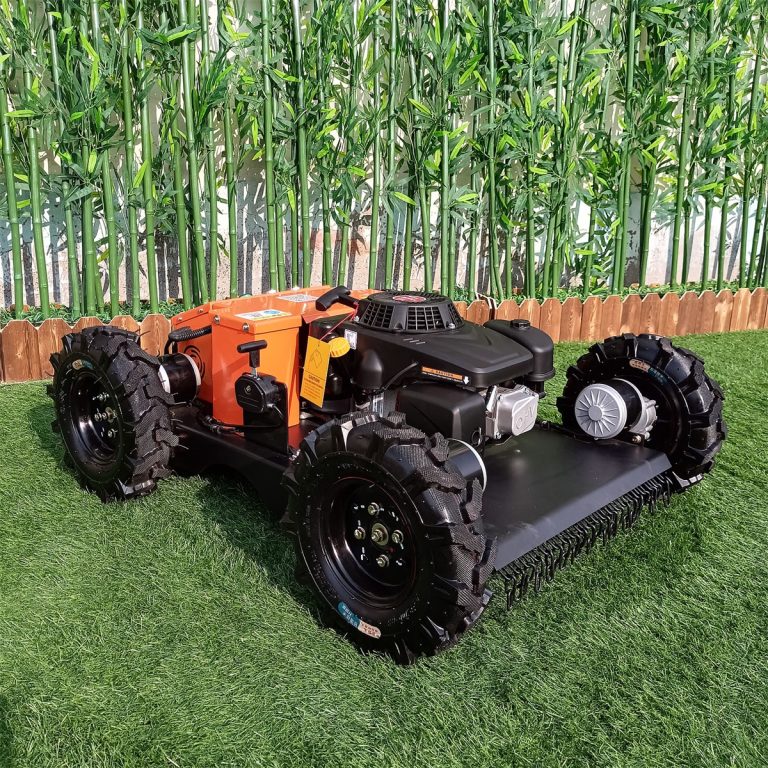
The innovative MTSK1000 model is designed for multi-functional use, featuring interchangeable front attachments that enhance its versatility. Users can easily switch between a 1000mm-wide flail mower, hammer flail, forest mulcher, angle snow plow, or snow brush. This adaptability makes it suitable for a wide range of applications, including heavy-duty grass cutting, shrub clearing, vegetation management, and efficient snow removal.
Equipped with electric hydraulic push rods, the mulcher allows for remote height adjustment of attachments, streamlining operations and making it easier for users to adapt to different mowing conditions. This feature contributes to the overall efficiency and effectiveness of the machine.

In terms of power, the MTSK1000 stands out with its 48V configuration, which significantly reduces current flow and heat generation compared to competing models that use 24V systems. This higher voltage enables longer continuous operation while minimizing the risks of overheating, ensuring stable performance even during extended mowing tasks.

The intelligent servo controller integrated into the mulcher precisely regulates motor speed and synchronizes left and right tracks, allowing for smooth and straight-line travel without constant adjustments. This not only reduces the operator’s workload but also minimizes risks associated with over-correction, particularly on steep slopes.